

Late 1960s ©Willmott Estate
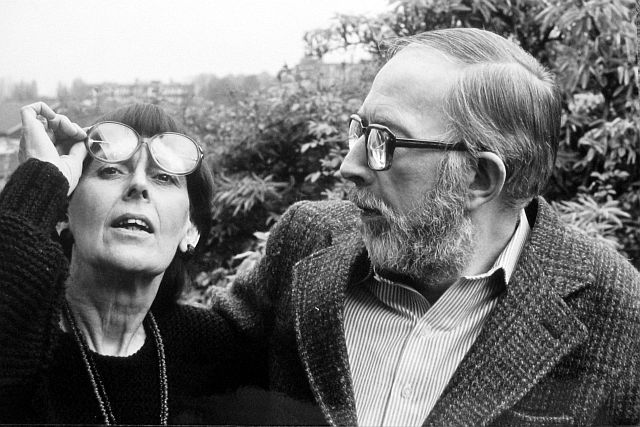
Phyllis and Peter Willmott mid 1970s ©Willmott Estate
PHYLLIS WILLMOTT (1922-2013)
Phyllis grew up in a working class area of South East London. On leaving school she worked at the Times Book Club, 1938-9, and then at the headquarters of the National Provincial Bank in Bishopsgate, in the City of London, 1939-43. She joined the Women’s Auxiliary Air Force (WAAF) and served as a meteorological officer. After the war, she trained as an almoner (a medical social worker) and met Peter Willmott who was working at a Methodist homeless hostel at the time. They married in 1948, when Peter was working at St Pancras Electricity Company. He subsequently joined the Labour Party research unit headed by Michael Young, from where they both moved on to set up the Institute for Community Studies as partners in 1954. Phyllis, Peter and their two young sons moved into the flat at the top of the Institute for Community Studies in Bethnal Green while Peter and Michael Young conducted an intensive study of the area for their renowned study Family and Kinship in East London.
Phyllis Willmott kept two diaries during this period. One was her personal diary kept in a ledger, with the Bethnal Green material running from May 1954 to November 1954. She also kept a typed-up Bethnal Green Journal running from October 1954 to March 1955. The journal diary entries contain detailed descriptions of life in the local community and friendships with local mothers. While Peter Willmott organised a general survey of Bethnal Green adults and a sub-sample of semi-structured interviews with 45 married parents with dependent children, Phyllis went shopping in the local market and waited at the school gates with the other mothers – and wrote it all down. There are traces of the contribution of her observational insights in the published version of Family and Kinship in East London.
In addition, Phyllis conducted interviews, analyses and writing up for Peter Willmott’s follow up book The Evolution of a Community. A Study of Dagenham After Forty Years (1963). She is also credited for her editing work on Peter’s book Adolescent Boys of East London (1966) about boys growing up in Bethnal Green.
Phyllis was an accomplished writer in her own name. Her publications include The Consumer’s Guide to the British Social Services (1967); four volumes of memoirs comprising Growing Up in a London Village (1979), A Green Girl (1983), Coming of Age in Wartime (1988), and Joys and Sorrows (1995); a biography A Singular Woman: The Life of Geraldine Aves (1992); and a family history, From Rural East Anglia to Suburban London (1998).
Phyllis’ and Peter’s papers can be found at the Churchill Archives Centre, University of Cambridge

Pat Marsden with Dennis Marsden 1960s ©Marsden Estate
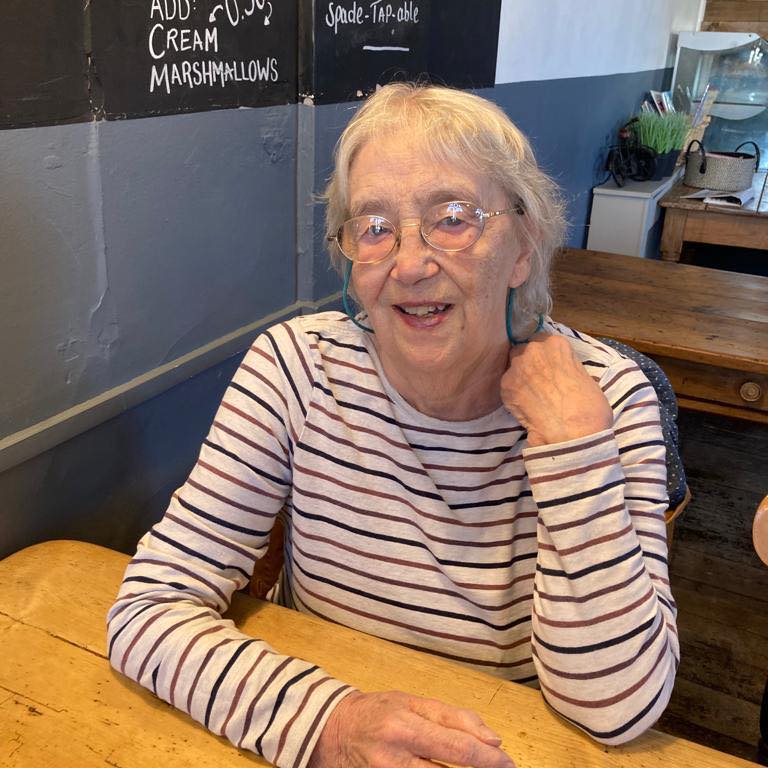
2020s ©Marsen Estate
PAT MARSDEN (1940-2023)
Pat grew up in a working-class household in Huddersfield in the North of England. She left school at 16 and worked in a library and for a local newspaper. She met Dennis Marsden in a jazz club in Huddersfield and they married in 1961. Dennis was working at the Institute for Community Studies at the time. Pat accompanied Dennis as he travelled around Britain doing interviews for an Advisory Centre for Education ‘Parents and Schools’ survey. Dennis then got a job at the Salford Royal College of Advanced Technology (now Salford University) and began work on a new community study – the Salford Slum and Rehousing Study. Pat, Dennis, their young son and young baby moved into Davenham House on Trinity Estate in Salford in 1963 and lived there for 18 months.
Pat kept a handwritten diary in two exercise books for six months, starting shortly after she arrived. The diary material involves lively descriptions of life on a local estate, with discussions of family life, parenting and childhood. Dennis Marsden’s detailed notes and research diary contain observations of the Tenants’ Association, political processes, and so on, while Pat recorded the everyday life in the flats, happening in the square outside the window of her maisonette at number 2 Davenham House. The diary entries include an engaged account of poor working class children’s life on the Salford housing estate, capturing characters and activities, heralding late 20th century ethnographies of childhood that detail aspects of the minutiae of children’s cultures.
The research was never written up because Dennis Marsden was recruited to a position at the University of Essex before the study was completed, and the Marsden family moved to the South of England. Nonetheless, it is evident that Dennis intended to draw on Pat’s diary in analysis and writing up from the careful logging he made about its contents. In the diary itself, using a red pen, he numbered the pages and inserted codes next to most of the adults and children that Pat mentioned in her entries.
Dennis also thanked Pat in the acknowledgements section of his 1973 book Mothers Alone: Poverty and the Fatherless Family, for her ‘continuing interest and help with the project’.
An interview conducted with Pat in 2009 can be accessed here
Papers from the research studies Pat worked on can be found in the Dennis Marsden collection at the University of Essex Special Collections

Late 1950s ©Sheila and Lucy Jackson

2020S ©Sheila Abrams and Lucy Jackson
SHEILA JACKSON/ABRAMS (1936 -)
Sheila grew up in a working-class household in Huddersfield in the North of England. Her father worked as a labourer at the nearly gas works and her mother ran the household and looked after their seven children. Sheila left school at 15 to start work and contribute financially to the household. She met her first husband Brian Jackson when they were both teenagers in a jazz club in Huddersfield. Brian, also from a working class Huddersfield family, went to the local grammar school, and then later to the University of Cambridge. After Brian graduated, they married and moved to Cambridge.
In the late 1950s Brian and Dennis Marsden began researching and writing a book about the impact of universal state education on working class children, under the auspices of the Institute of Community Studies founded by Michael Young. The work was subsequently published as Education and the Working Class. Sheila contributed to the interviews and helped with the field work. Brian and Dennis Marsden followed this with a study of working class communities in Huddersfield. Sheila contributed to the interviews and to the writing for the book Working Class Community: Some General Notions Raised by a Series of Studies in Northern England, which was eventually published by Jackson in 1968. In the acknowledgements Brian stated ‘I don’t suppose I would have stuck at the project at all had I not only had the initial help from Sheila Jackson with the fieldwork and writing up, but generous and selfless encouragement all the way through’. Sheila’s marriage to Brian ended shortly after the book was published. However, she continued to work, conducting interviews and doing fieldwork for Michael Mann on displaced workers in Peterborough.
By the early 1970s Sheila had remarried another eminent sociologist, Philip Abrams and they moved to Durham in the North of England where Philip was appointed Professor of Sociology at the University. She became actively involved in designing a new research agenda, coming up with the idea of studying communes and the commune movement. Philip secured a grant to pursue the research and Sheila took a substantial role in conducting the fieldwork, staying in the communes and conducting interviews. She also took a significant role in the analysis and writing up of the research. The subsequent book, Communes, Sociology and Society was published in 1976. Phillip Abrams and the other male researcher, Andrew McCulloch took lead authorship, while Shelia and Pat Gore, the other female researchers’ efforts were marked through the term ‘with’ rather than ‘by’ to indicate the perceived lower status of their involvement. Nevertheless, it was acknowledged in the preface that Sheila had the idea for the research in the first place, analysed the questionnaire responses, and kept track of the organisation of the Commune Movement: ‘… it would have been very difficult for us to understand the groups we have written about in this book without this further work on the wider alternative society movements’. Sheila also was formative in Abrams’ posthumously published work on neighbours, written up by Martin Bulmer in 1985. Bulmer noted Sheila’s influence in his introduction, acknowledging her extensive intellectual and fieldwork input.
After Philip Abrams death, Sheila continued to do sociological field work, collaborating with Dennis Marsden on a study of married daughters caring for their elderly mothers who live with them. In this work she is (finally) acknowledged as a co-author.
Papers relating to the some of the studies Sheila worked on can be found in the Brian Jackson Collection at the University of Essex Special Collections and the Dennis Marsden collection at the University of Essex Special Collections
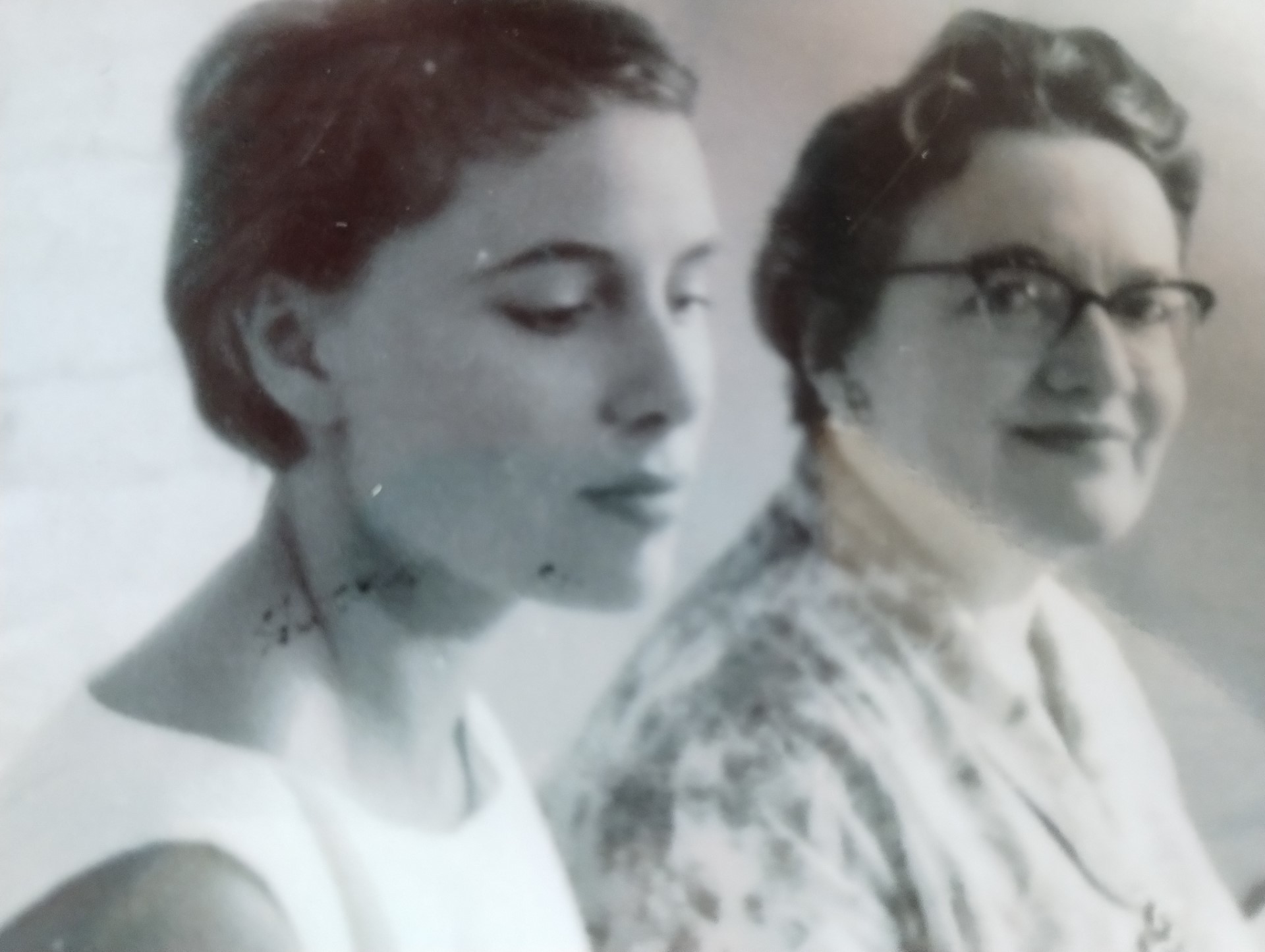
Ruth Townsend 1950/60s with Peter Townsend's mother ©Ann Oakley

©Matthew Townsend
RUTH TOWNSEND (1927-2011)
Ruth grew up in a well-to-do household in Hampstead, North London where she met Peter Townsend. They married in 1949, while both were studying at Cambridge University. Peter took up a visiting studentship at the Free University in West Berlin and Ruth accompanied him. They returned to London when Ruth became pregnant with their first child and rented a small flat in Westminster where Peter took a job as a researcher at the Political and Economic Planning think tank (PEP). When Ruth became pregnant again in 1952 they moved to a house in Hampstead. Peter continued his academic career, while Ruth looked after the children and also did extensive caring work for sick and elderly neighbours. Her conversations with the diverse range people in the local area almost certainly fed into Peter’s political and sociological work.
While at PEP Peter met Michael Young who asked him join the newly founded Institute for Community Studies to research old age. During this period Ruth organised regular gatherings and semi formal dinner parties attended by influential politicians, journalist and academics and is described by Peter as having engaged passionately in the debates and discussions. These social events were crucial in building Peter’s career.
In 1957 Peter took up a 3 year post at LSE to work on a Nuffield funded study of old age. Ruth became involved with the fieldwork, conducting detailed interviews with residents and staff in care homes for the elderly, both in London and Liverpool, contributing to what would eventually become Peter’s ground-breaking study The Last Refuge. The book is dedicated ‘to Ruth’, and in the acknowledgements she is referred to as one of four people without whom the book would not have been possible. However, while the others are named Ruth is described only as ‘my wife’. Ruth is also credited in The Personal, Family and Social Circumstances of Old People published by Peter Townsend and Brian Rees. Ruth went on to conduct interviews for Peter’s subsequent project, a pilot study for what was to become a large cross-national study of the elderly, involving collaborators in Denmark, Britain and North America. The work Ruth contributed was intended to be part of a book to be co-written by Peter Townsend and Sheila Benson (Old People in Hospital). But although Sheila Benson wrote up a full draft, Townsend did not allow it to be published.
Ruth and Peter had 4 four children while living at Hampstead. The marriage ended when Peter left in 1974. While Peter remarried soon after, Ruth took a Land Rover and their youngest son (11 years old at the time) travelling through Europe and the Middle East to Afghanistan, Tibet and China for a year. On their return she became involved with design work and even helped to run a floating restaurant on Regent’s Canal, before moving to Ireland.
A more detailed biography of Ruth, written by her eldest son, Matthew Townsend can be found here
See also, Chris Renwick, The Family Life of Peter and Ruth Townsend: Social Science and Methods in 1950s and Early 1960s Britain, Twentieth Century British History, Volume 34, Issue 4, December 2023, Pages 634–656
Papers relating to the studies Ruth worked on can be found in the Peter Townsend Collection at the University of Essex Special Collections

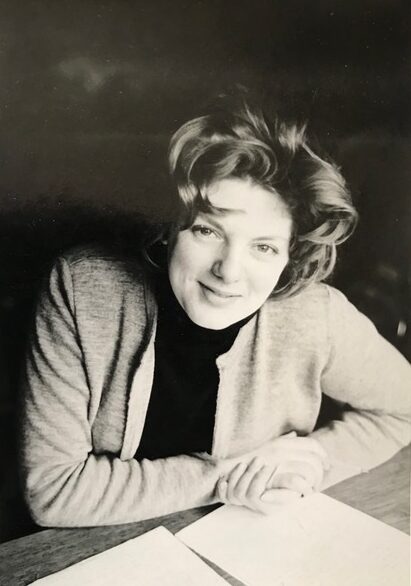
1965 ©Ann Oakley
KAY TITMUSS (1903-1987)
Kay grew up in a middle-class household in South London and worked as a social worker for unemployed people. She met Richard Titmuss in 1934 while on a walking tour of North Wales and they married in 1937. Richard had left school at 14 with no qualifications and was at the time working as an insurance agent at the County Fire Office. He was also passionately involved in Liberal party politics and wrote extensively about health and welfare issues. The publications secured him the very first Chair of Social Administration at the London School of Economics in 1950.
Kay’s contribution to Richard’s work has been a source of debate, especially in the later years of Richard’s career. In the early years at least, they discussed the ideas that went into Richard’s work. Kay had hands on experience of social welfare and knowledge that would have informed Richard’s perspectives. She helped to run a centre for unemployed men in Fulham, London until 1940, while Richard worked from documentary evidence. Certainly, Kay’s cultural resources and confidence assisted Richard in his career socially, supporting his academic and policy connections, and thus enabling his achievements and helping him to fulfil his career ambitions (Oakley 1997).
Richard and Kay began writing political books, pamphlets and articles in Kay’s back bedroom in her family home, with Kay typing up and editing his work as the more literate of the two. In 1943 a book exploring the consequences of population health and falling birth rates: Parents Revolt. A Study of the Declining Birth-rate in Acquisitive Societies, was published (unusually) as jointly authored. Kay subsequently conducted research for Richard, which involved sampling 3000 record cards from Mother and Child Welfare Clinics, and an interview with the couple published in the Vancouver Sun in 1966 attributed Richard’s interest in social welfare to Kay’s enthusiasm. Ultimately though, Oakley feels that Kay was frustrated by an inability to contribute her own experience of social welfare work and play an intellectual role in Richard’s work (2014).
See also Ann Oakley (1997) Man and Wife: Richard and Kay Titmuss: My Parents’ Early Years, London: Flamingo.
1964 ©Adrian & Dorothy Sinfield
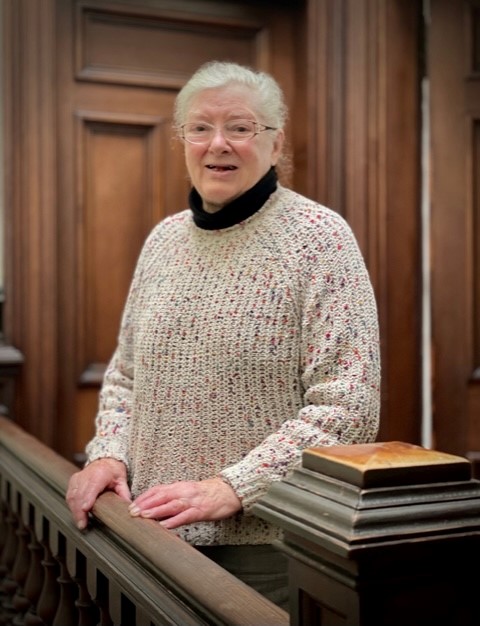
2020s ©Adrian & Dorothy Sinfield
DOROTHY SINFIELD (1941 -)
Dorothy grew up in Watford, Hertfordshire, the daughter of parents who originated from pit villages near Durham. Dorothy met Adrian in 1963 when she was in the final year of her Social Studies degree at Newcastle University (then King’s College, Durham University). Adrian was carrying out research for Peter Townsend and Brian Abel-Smith on unemployment experiences of men in North Shields, and Dorothy’s class had been asked for help in accessing interviewees. Dorothy took this on as a fieldwork project and then interviewed some of the wives of Adrian’s research participants (for which Peter and Brian found extra money to pay her).
Dorothy married Adrian in 1964 and they moved to the US to undertake comparative research on unemployed men at the New York State Mental Health Research Unit in Syracuse. Dorothy did most of the interviews and they published a jointly-authored chapter on the study. Returning to the UK in 1965, they moved to Essex shortly before Dorothy gave birth to their first daughter. Adrian began as an assistant lecturer in the new University in Colchester. Dorothy had another daughter and looked after the children. In 1973, as soon as the children were a little older, Dorothy carried out a study of the experiences of postgraduate students at the University for Peter Townsend. She then undertook social survey training and became a regular interviewer for the General Household Survey as well as the census and other large surveys.
In 1979 Adrian, Dorothy and family moved to Edinburgh, where Adrian continued teaching and research. Dorothy carried on interviewing for the Social Survey before moving on to interviewing and analysis in academic and voluntary agency research In 1990 she and Adrian took on a study, Excluding Youth, on the impact of removal of benefits from young people. Dorothy carried out 30 in-depth over the course of a month. A Channel 4 documentary broadcast in 1991 made headline news in the national press.
Dorothy read, discussed and commented on all of Adrian’s drafts and redrafts while bringing up children and thereafter. She had an important and valuable influence on his thinking, research and publications.
An interview conducted with Dorothy and Adrian in 2022 can be accessed here.